Look Left, Look Right, Look Icelandic: A Walker's Field Guide to Reykjavik Intersections
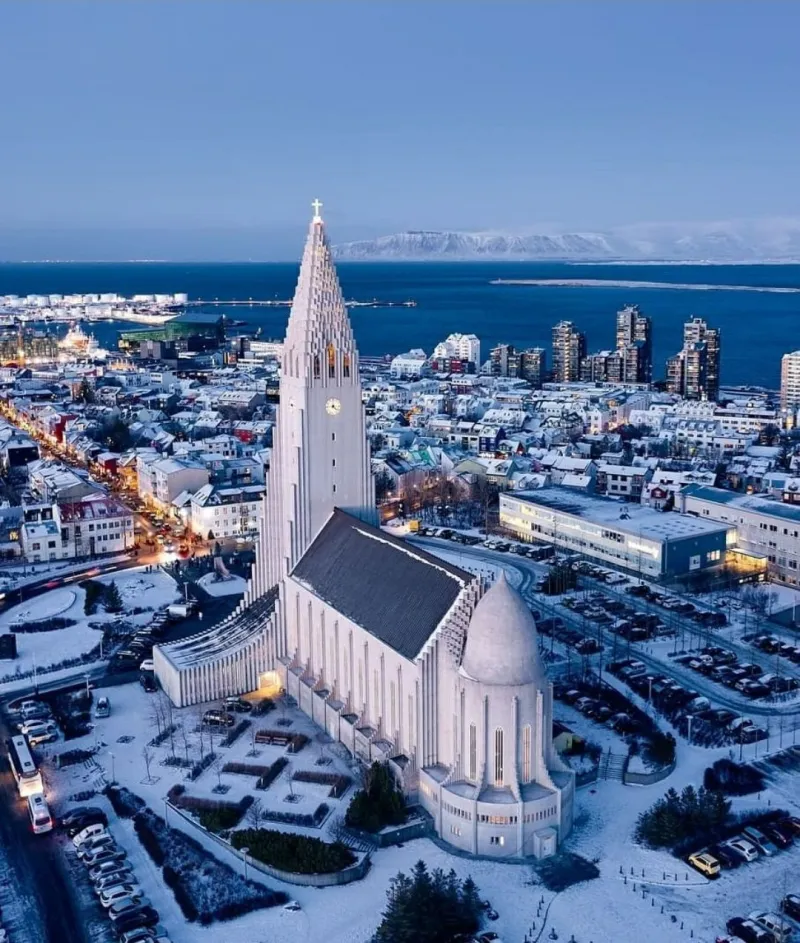
Photo: Reykjavik street crosswalk pedestrians winter downtown intersection, via i.pinimg.com
Nobody warns you, but there is a specific moment on every first trip to Reykjavik when you stand at a curb, see a car coming, and realize you have no idea what the local custom is. Do you wait? Do they stop? Is that crosswalk real?
The good news: Reykjavik drivers are, by and large, courteous and law-abiding, and pedestrian crossings are respected. The less good news: the city has a set of small street-level habits that do not match what US visitors expect, and a few intersections that will genuinely confuse you. Here is the walker's version of the map.
Rule One: Right on Red Is Not a Thing
Start with the biggest difference. In Iceland, turning right on a red light is generally not permitted. That flashing yellow you may see at some junctions means proceed with caution — it is not a green light for cars to barrel through while you step off the curb.
The practical takeaway for pedestrians: when you have a walk signal, cars turning across your path are less likely to sneak through than they are at home. Still make eye contact. Do not march out on faith.
Rule Two: Crosswalks Are Sacred, But Not Invisible
Zebra crossings are marked and drivers yield. What surprises people is how many crossings sit mid-block, with no traffic light, no painted stop line, and no signage beyond the stripes. Treat them as real crossings — because they are — and step out with a clear, confident pace rather than a hesitant shuffle. Hesitation confuses drivers more than decisiveness does.
Downtown: Lækjartorg and the Austurstræti Tangle
Lækjartorg is the hinge of the center, and the streets around it — Austurstræti, Tryggvagata, Lækjargata — meet at odd angles with several crossings in quick succession. Two habits help here.
First, use the crossings rather than jaywalking between buses and taxis; this area is busy with both. Second, watch for the one-way streets feeding in. Bankastræti and several neighbors run one direction, so a car may appear from an angle you did not expect. Look both ways even where it feels silly.
Hverfisgata, Laugavegur, and the Feeder Streets
The parallel pair of Hverfisgata and Laugavegur, connected by short cross streets like Klapparstígur and Vatnsstígur, is where most visitors spend most of their walking time. The crossings here are frequent and mostly well-marked, but two things catch people out.
Hverfisgata carries a bus lane, so a Strætó bus may appear in a lane you assumed was for parked cars. And the cross streets are narrow enough that drivers sometimes nose out before they can see the whole crossing. A half-second pause at the corner costs nothing.
Hlemmur: The Wide One
Hlemmur square is a big, open junction with multiple lanes, bus stops, and a food hall drawing crowds. It is the single most sprawling crossing in the central city and the one where visitors most often misjudge the timing.
The fix is simple: cross where the stripes are, wait for the signal even if the road looks empty, and do not try to sprint across on a countdown. Buses turning in and out of the terminal need space, and they are bigger than you.
Sæbraut and the Shoreline
Sæbraut is the fast road along the water, and it is the one place in the center where you should not improvise. Crossings are spaced out, traffic moves quickly, and the wind on this stretch is strong enough to affect your balance and your hearing.
Plan your shoreline walk so you cross at a marked point and then stay on the promenade side. The Sun Voyager and the mountain view are the reward; the multi-lane road is not a place for a shortcut.
The Þingholt Alleys
The little streets of Þingholt — narrow, cobbled, and gorgeous — often have no sidewalks at all. Cars are rare here, but delivery vans are not, and they come around corners with very little warning. Walk in single file where the street is tight, and step into a doorway if something large approaches.
Winter Ice: The Slopes That Bite
The real Reykjavik pedestrian hazard is not traffic. It is ice. The city clears and grits the main routes, but shaded sidewalks, north-facing streets, and the slopes up to Hallgrímskirkja along Skólavörðustígur stay slick for days after a freeze.
Walk on the gritted strip even if it means crossing the street. Take the stairs slowly. And if you are visiting between November and March, shoes with actual tread matter more than any jacket you packed.
Bike Paths and Bus Lanes
Reykjavik has grown a real network of bike lanes, and cyclists use them year-round. The multi-use path along the shore is shared, and the painted lanes near the university and Hringbraut are busy in good weather.
Two rules: do not walk in the bike lane, and check it before you step off a curb, because a silent cyclist at speed is the one thing you will not hear coming. Bus lanes, meanwhile, are for buses and taxis — cross them like any other lane, one at a time.
The Two-Second Habit
If you remember nothing else: stop, look at the actual road rather than your phone, and make eye contact with the nearest driver before you commit. Reykjavik rewards that small pause. The city moves at a human pace, and the crossings, once you understand them, do too.