Sun at Midnight, Tired by Noon: Your Real Guide to Surviving Iceland's Summer Daylight
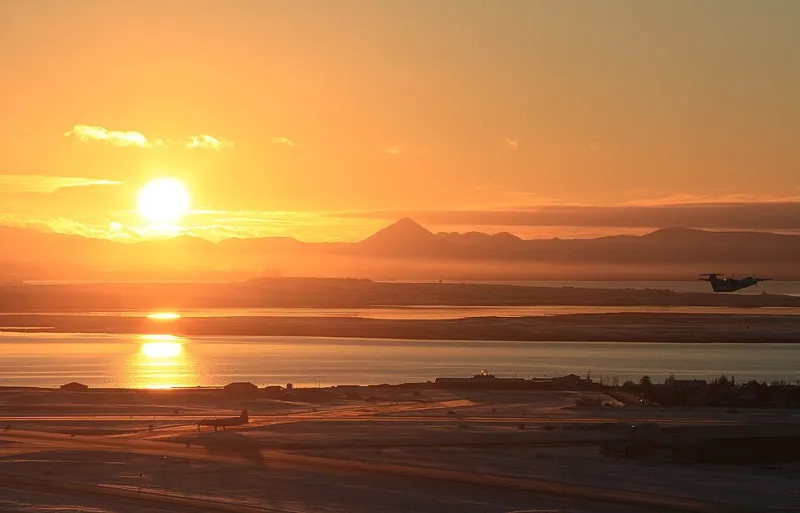
Photo: Helgi Halldórsson from Reykjavík, Iceland, CC BY 2.0, via Wikimedia Commons
You've seen the photos. The sun hanging low over the harbor at 11:45 p.m., painting everything amber and rose. It looks magical, and it is — right up until you realize it's also doing that at 2 a.m., and your body has absolutely no idea what time it is, and you've been awake for 22 hours because your brain kept insisting it was still afternoon.
Reykjavik's midnight sun season runs roughly from late May through late July, with the longest days clustering around the summer solstice in late June. During peak season, the sun barely dips below the horizon at all. For visitors from the US, where your body is already jet-lagged and your internal clock is already confused, this can be either an incredible gift or a slow-motion disaster. Usually both.
Here's how to make it work in your favor.
What's Actually Happening (The Short Science Version)
Iceland sits just south of the Arctic Circle. During summer, the Earth's axial tilt means the northern latitudes receive nearly continuous sunlight. In Reykjavik at the solstice, the sun sets around midnight and rises again before 3 a.m. — and even during those few hours, it never gets fully dark. Think of it as a very long, very beautiful dusk that just keeps going.
Your body regulates sleep using melatonin, a hormone triggered by darkness. No darkness, no melatonin signal, no sleepiness. This is why the midnight sun genuinely disrupts sleep even for people who think they'll be fine. You won't just be tired — you'll be weirdly wired at 1 a.m. while also feeling like you could fall asleep standing up at noon.
Knowing this in advance is half the battle.
If You Want to Actually Sleep
Let's start here, because sleep deprivation will ruin a trip faster than bad weather.
Blackout curtains are non-negotiable. Most hotels and guesthouses in Reykjavik have them — it's a fact of life in Iceland. But if you're staying in an Airbnb or a budget guesthouse, check before you book. A room without blackout curtains in June is basically sleeping in a greenhouse. If your accommodation falls short, a sleep mask is a worthy carry-on investment.
Set an alarm and stick to a schedule. Your body will try to trick you. At midnight, the light will tell you it's 6 p.m. and you should probably eat dinner and go for a walk. Ignore it. Decide what time you want to wake up, count back 7-8 hours, and commit to being horizontal by then — curtains drawn, phone face-down.
Melatonin supplements can help bridge the gap. These are widely available over the counter in the US and can be a useful tool for signaling to your body that it's actually bedtime. A low dose (0.5 to 1 mg) taken about an hour before your target sleep time works better for most people than the higher doses. Check with your doctor if you're on any medications.
Avoid alcohol as a sleep aid. This seems counterintuitive given that Reykjavik has a genuinely great bar scene, but alcohol fragments sleep quality even when it helps you fall asleep faster. You'll wake up at 4 a.m. feeling like it's noon (because it basically looks like noon), and then you're done.
If You Want to Maximize the Midnight Sun
On the flip side, the midnight sun is one of the most extraordinary things you can experience as a traveler, and leaning into it can make for some of the best memories of your trip.
Plan your big outdoor activities for evening. The light between 9 p.m. and midnight during summer in Reykjavik is genuinely stunning — soft, golden, and dramatic in a way that midday sun never manages. The crowds thin out, the wind often dies down, and the city takes on a completely different character. Walking the Seltjarnarnes coastal path or climbing up to Öskjuhlíð hill at 10:30 p.m. on a clear evening is an experience you won't forget.
Visit the harbor and Grandi district late. Some of the waterfront spots stay lively late into the evening during summer, and the light on the water at 11 p.m. is the kind of thing photographers plan whole trips around. You don't need a fancy camera — just show up.
Take a midnight sun boat tour. Several operators out of the Old Harbour run evening and late-night tours specifically timed to the midnight sun. These book up fast in June and July, so reserve in advance. Watching the sun hover just above the horizon from the water is a genuinely once-in-a-lifetime moment for most visitors.
Managing the Jet Lag Layer
US visitors are dealing with a double challenge: the time zone shift on top of the light disruption. East Coast travelers are five hours behind Reykjavik; West Coast visitors are eight hours behind. That means your body might want to sleep at 3 p.m. Reykjavik time (10 a.m. back home) and wake up at 3 a.m. local time feeling completely alert.
The fastest way to adjust is to get outside in the morning light as soon as you wake up, eat meals on Reykjavik time from day one, and resist the urge to nap for more than 20 minutes in the afternoon. It takes most people two to three days to mostly adapt.
Be patient with yourself. And maybe plan your most demanding hike for day three rather than day one.
The Honest Takeaway
The midnight sun will mess with you a little. That's just part of the deal. But with a bit of planning — blackout curtains, a firm sleep schedule, and a willingness to be outside at 11 p.m. when the light is absurdly beautiful — it becomes one of the defining experiences of a Reykjavik summer trip rather than a logistical headache.
Lean into the weirdness. You're in Iceland. The rules are different here.